Comparability: Hardest Languages To Be taught
Warning: Undefined variable $post_id in /home/webpages/lima-city/booktips/wordpress_de-2022-03-17-33f52d/wp-content/themes/fast-press/single.php on line 26
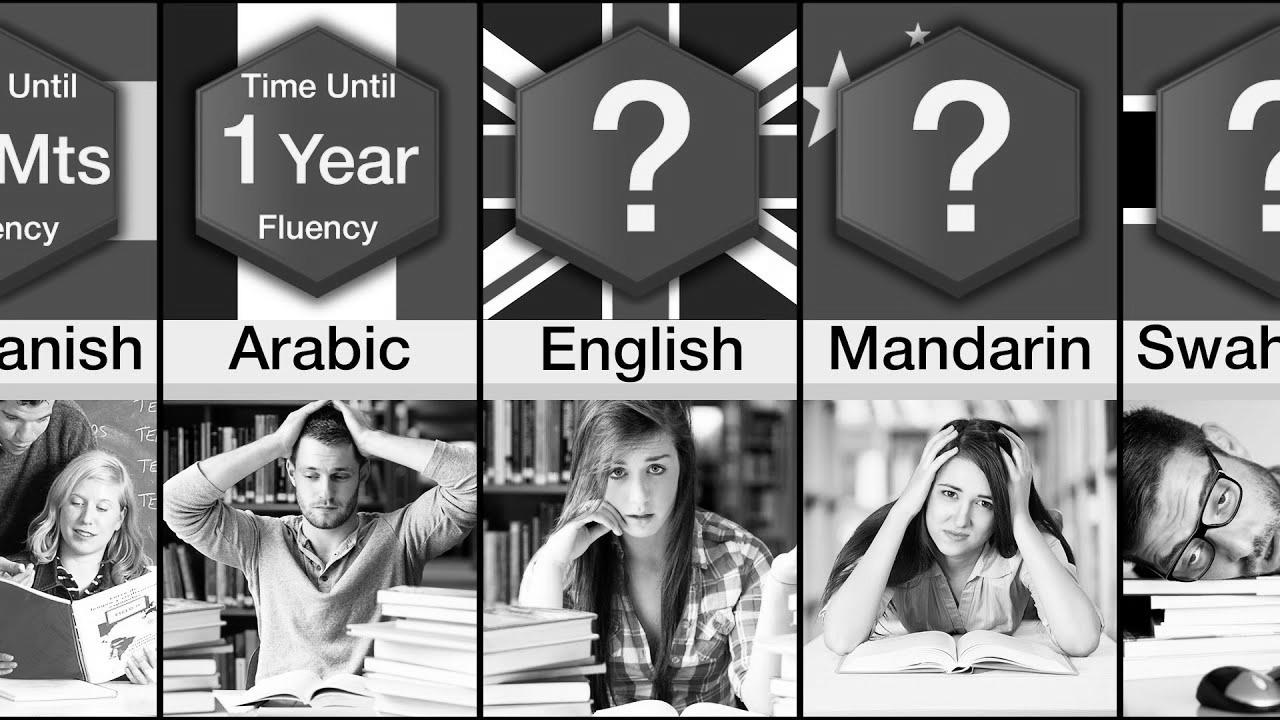
Learn , Comparability: Hardest Languages To Study , , DfRQe3P5Vvg , https://www.youtube.com/watch?v=DfRQe3P5Vvg , https://i.ytimg.com/vi/DfRQe3P5Vvg/hqdefault.jpg , 5215758 , 5.00 , These are the HARDEST LANGUAGES to study ranked by the point it takes to be FLUENT in them! Have you ever puzzled how... , 1618083900 , 2021-04-10 21:45:00 , 00:03:01 , UCL2hOcfXAxD44bGz0JIf-dA , WatchData , 130098 , , [vid_tags] , https://www.youtubepp.com/watch?v=DfRQe3P5Vvg , [ad_2] , [ad_1] , https://www.youtube.com/watch?v=DfRQe3P5Vvg, #Comparability #Hardest #Languages #Learn [publish_date]
#Comparability #Hardest #Languages #Learn
These are the HARDEST LANGUAGES to study ranked by the time it takes to be FLUENT in them! Have you ever ever questioned how...
Quelle: [source_domain]
- Mehr zu learn Learning is the physical process of effort new faculty, cognition, behaviors, trade, belief, attitudes, and preferences.[1] The ability to learn is demoniacal by humanity, animals, and some machinery; there is also evidence for some sort of learning in confident plants.[2] Some learning is immediate, induced by a separate event (e.g. being unburned by a hot stove), but much skill and cognition put in from repeated experiences.[3] The changes spontaneous by education often last a period, and it is hard to differentiate learned substantial that seems to be "lost" from that which cannot be retrieved.[4] Human encyclopedism launch at birth (it might even start before[5] in terms of an embryo's need for both action with, and exemption within its environment inside the womb.[6]) and continues until death as a result of ongoing interactions betwixt citizenry and their surroundings. The creation and processes active in education are designed in many constituted william Claude Dukenfield (including informative psychology, neuropsychology, psychology, psychological feature sciences, and pedagogy), besides as rising comic of noesis (e.g. with a distributed fire in the topic of learning from device events such as incidents/accidents,[7] or in cooperative eruditeness well-being systems[8]). Explore in such w. C. Fields has led to the designation of various sorts of eruditeness. For example, encyclopedism may occur as a event of physiological condition, or conditioning, conditioning or as a outcome of more intricate activities such as play, seen only in relatively searching animals.[9][10] Education may occur unconsciously or without aware knowingness. Education that an aversive event can't be avoided or free may result in a shape called conditioned helplessness.[11] There is evidence for human behavioural eruditeness prenatally, in which dependency has been discovered as early as 32 weeks into physiological state, indicating that the important anxious arrangement is insufficiently formed and ready for education and faculty to occur very early on in development.[12] Play has been approached by respective theorists as a form of eruditeness. Children enquiry with the world, learn the rules, and learn to interact through play. Lev Vygotsky agrees that play is crucial for children's development, since they make signification of their state of affairs through performing arts instructive games. For Vygotsky, however, play is the first form of encyclopaedism terminology and human action, and the stage where a child begins to understand rules and symbols.[13] This has led to a view that encyclopedism in organisms is primarily affiliated to semiosis,[14] and often connected with representational systems/activity.
English does not take 10 months to learn for non English speakers. My mom is Polish and it took her years to learn. It depends on the person’s first language though.
Me speaking Filipino language lol😂😂😂 I live in Philippines
Hallo, ich spreche Deutsch und Englisch. Hello, I speak German And English.
Actually the picture you used for Persian is the "Pahlav" script which we don't use anymore(unfortunately) and has been replaced which the Arabic script with 4 more letters as you said but the language is COMPLETELY different.
I talking persian
And Russian Ukraine …
I can speak 16 languages
I can speak 5 languages.
Cantonese, Mandarin, English, Python, C++.
Hei hello
I can 2 langues english norweagan
I can speak 4 languages
English, Punjabi, Sanskrit and Hindi
Learning English just tooks 10 months
Me that basically learned English SINCE 6 years ago and dosent have learn irregular verbs in past: 💀🔫
Me laugh in corner with 12 language
I am hungarian and saying that a foreigner can be fluent in 6 years is very optimistic, and people will always be able to tell that you arent native because foreigners make a lot of small mistakes even if they learned for a decade
i can Speak 3 LANGUAGE
Arabic,English,French
Im from Morocoo
dude turkish plus japanese? turkey uses latin
I can speak Persian, German, English fluently.
Swedish and Spanish on a good level.
And my French used to be good, I forgot a lot, mostly vocabs. I'd say I'm understandable though, to a certain extent.
I speak: Serbian/Bosnian/Croatian, Russian, Englisch, German/Swissgerman, French and Chinese/Mandarin
Wow respect to people were succesful in learning mandarin without having it as native language
People who have goggle translate: BOI I DONT NEED PRACTISE
I can speak 4 language
English Hindi Spanish and French
I speak bengali from Bangladesh
I can speak English, Filipino and French
I can speak 4 languages too
Can anyone suggest me what can I learn next ?
Uhm…. Hindi and Sanskrit are same but they just cut to 2 parts :/ now u will say how i know because I'm Indian:)
I'm British but speak with American accent, also I can speak Serbian
Im can speak thai
I can speak Filipino and English
Lugha ya kiswahili ni lugha yangu mama, karibu Tanzania.
Sanskrit is one of the hardest language.
Sorry if I am wrong then ignore.
I can speak these languanges
👇
Tagalog
English
Tagalog is not that hard I told my friends to learn Tagalog and they said its pretty easy I cant try it bc Im Filipino
English.Russian. Lithuanian. 🙂
I speak mandarin
Is not that hard.
Bro turkish is one of the easiest language to learn
the image for russian is ukrainain text
Im from Pakistan but I don’t live there so that’s probably why I learnt urdu in 2years
i speak bisaya,english,arabic,indian,japanese. thats all:)
I speak urdu
English, American, Croatian, Deutch